
AI is reshaping publishing in real time. This page is your BookLogix hub for the updates that matter to authors, independent publishers, and publishing professionals across the book industry. Explore current AI news, BookLogix Breakdowns, webinars and events, practical resources, legal developments, trusted experts, and tools to help you navigate change with clarity and confidence.
This resource hub is actively being built and expanded. We launched early so you can begin using the content now while we continue adding new tools, updates, and features. Check back often as the page grows.
Important disclaimer: BookLogix is not a law firm, and nothing on this page should be considered legal advice. For legal questions, rights matters, contracts, copyright issues, or business-specific concerns, we strongly recommend consulting a qualified attorney.
Original articles from BookLogix exploring the real-world impact of AI on publishing,
copyright, authorship, book sales, creative protection, and the evolving publishing landscape.
Where Is My Copyright Certificate?
 booklogix
 May 13, 2026

AI in Publishing: Key Risks Authors Can’t Afford to Miss
BookLogix
October 14, 2025
We read the major AI-in-publishing articles and pull out the parts that matter most to authors.
Each BookLogix Breakdown includes a link to the original article for readers who want the full context.
BookLogix Breakdown: Why the Meta Copyright Lawsuit Matters for Authors
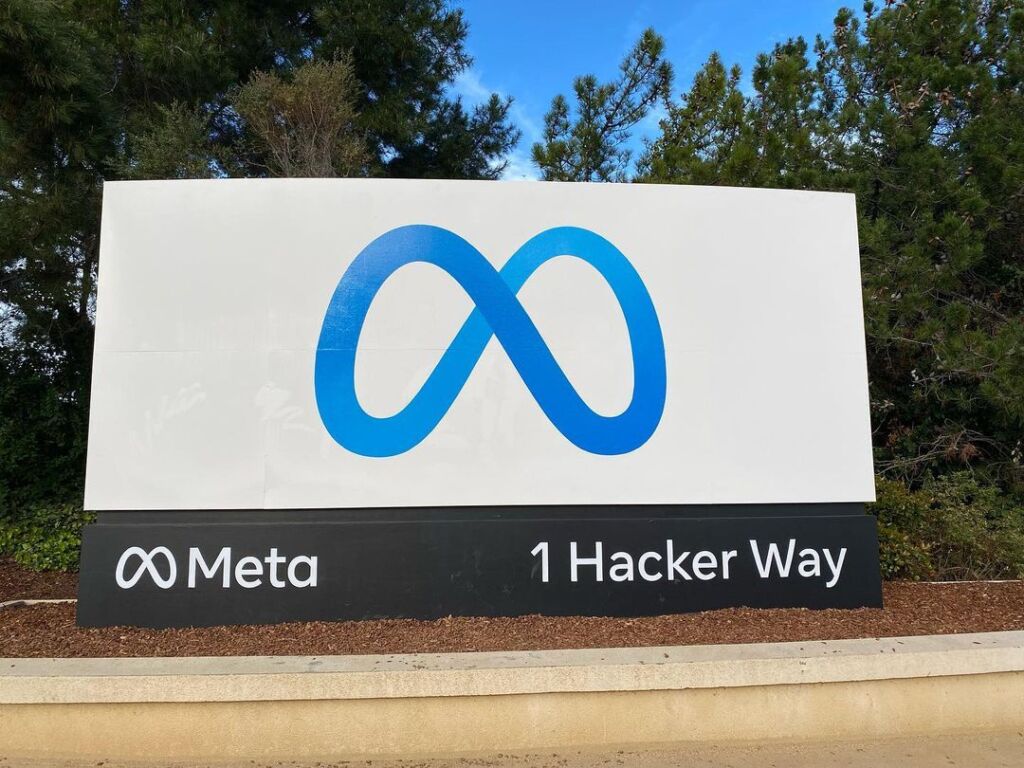
On May 5, 2026, five major publishers—Elsevier, Cengage, Hachette, Macmillan, and McGraw Hill—along with bestselling author Scott Turow, filed a class action lawsuit against Meta and Mark Zuckerberg in federal court in Manhattan. The lawsuit claims Meta used millions of copyrighted books, journals, and other written works without permission to train its Llama AI models.
The publishers say Meta could have licensed this content but instead used works from unauthorized sources. They are asking the court for damages and for Meta to destroy infringing copies it controls. Meta denies wrongdoing and argues that AI training may qualify as fair use.
For authors, this matters because your book is not just “content.” It is intellectual property. If AI companies can use books without permission, payment, or transparency, it affects the value of the work authors spend years creating.
For small and mid-size publishers, author-publishers, and industry partners, this case could help shape how copyrighted books are treated in the AI era. It may influence future licensing models, author contracts, permissions language, AI-use policies, and how publishers protect their catalogs.
Bottom line: This case is not decided yet. But it raises a major question every author and publisher should care about: Who has the right to use a book to build commercial AI tools, and should the people who created or published that book be asked, credited, or paid?
Source: Publishers Weekly, “Publishers File Lawsuit Against Meta, Mark Zuckerberg,” May 5, 2026.
AI IS HERE, NOW WHAT?: AUTHORS IN THE AGE OF AI
SUMMER SERIES PRESENTED BY BOOKLOGIX
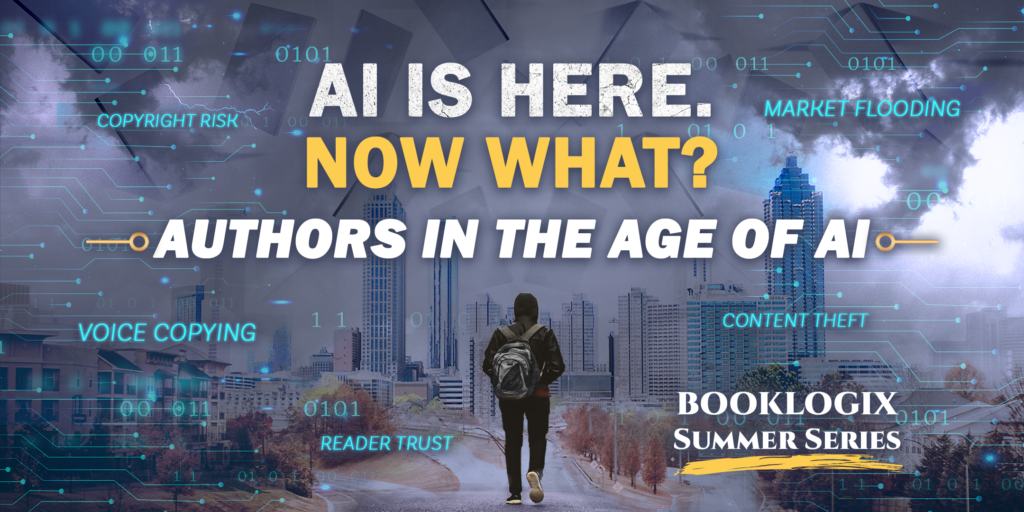 Publishing is shifting fast. Artificial intelligence is changing how books are written, marketed, sold, and evaluated—and many authors are left sorting through hype, fear, and conflicting advice.
This four-part summer series gives writers something rare: clear, practical conversations rooted in the real world of publishing.
Join us for coffee, networking, expert-led sessions, live Q&A, and an optional behind-the-scenes tour of BookLogix’s production facility to see how books are professionally made.
Whether you are traditionally publishing, self-publishing, or still writing your first book, these sessions will help you make smarter decisions and protect your future as an author.
What to Expect Each Session
10:00 a.m. Coffee & Networking
10:30 a.m. Featured Talk + Live Q&A
12:00 p.m. Optional Facility Tour
More than a lecture. This is a chance to connect with other writers, ask real questions, and gain insider perspective on an industry in transition.
Summer Lineup
June 13, 2026
AI for Authors: What Helps, What Hurts, and What Actually Matters
AI is everywhere—but what is genuinely useful, what creates risk, and what should authors avoid entirely? This candid opening session cuts through noise and gives writers a grounded understanding of where things stand now.
July 18, 2026
AI and Book Sales: Visibility, Trust, Retailers & Reader Perception
Can AI hurt your sales? Will readers care? Are retailers paying attention? This timely session explores discoverability, credibility, platform policies, and the growing role trust plays in buying decisions.
August 15, 2026
Protecting Your Book in the Age of AI: Rights, Contracts, Disclosure & Creative Protection
From contracts to copyright concerns, disclosure language to content misuse, authors need to think defensively. Learn practical ways to protect your work, rights, and publishing options.
September 12, 2026
AI and the Future of Publishing: A Panel of Peers
A live panel featuring authors, publishers, designers, editors, and industry voices with different perspectives on AI. Honest discussion. Smart debate. Real answers.
Why Attend
- Understand what is changing in publishing
- Protect your book, brand, and rights
- Ask direct questions in a live setting
- Network with serious writers and industry professionals
- See how books are produced behind the scenes
- Make better publishing decisions with confidence
Seats Will Be Limited
Each session is free to attend, but capacity is limited based on room setup and available seating in our event space.
To ensure a quality experience for guests, advance registration is required, and tickets will be offered on a first-come, first-served basis until each session reaches capacity.
Registration opens May 1 on the BookLogix Events Page.
Practical guidance for authors navigating AI use, copyright questions,
contract language, creative rights, and the fast-changing rules shaping publishing.

The Authors Guild is the nation’s oldest and largest professional organization for writers, advocating for authors’ rights, fair contracts, copyright protection, and ethical publishing practices. Their AI resources are among the most practical and author-focused currently available.
AI Model Contract Clauses
The Authors Guild’s AI model clauses are designed to help authors better protect their manuscripts, copyrighted material, creative rights, and approval authority as AI becomes more common throughout publishing and media.
Protecting Your Manuscript from AI Uploads
This clause is designed to help prevent publishers, editors, agents, or service providers from uploading your manuscript or personal information into public AI tools like ChatGPT or Gemini without your written permission.
It also encourages safeguards that prevent your work from being used to train AI systems if AI tools are used during publishing workflows.
Preventing AI Editing Without Approval
This clause addresses concerns around publishers or service providers using AI tools to rewrite, edit, summarize, translate, or generate content from your work without your knowledge or approval.
The goal is to help authors maintain creative control over substantive editorial changes made using AI systems.
Approving AI Use for Audio, Translation, and Artwork
This clause focuses on author approval rights when AI may be used for audiobook narration, translation, cover design, illustrations, marketing materials, or other derivative publishing uses.
It is designed to help authors maintain visibility and control over how AI is incorporated into future versions or adaptations of their work.
Other Recommended Resources
Navigate issues related to AI and its implications for authors, publishing, copyright, and the writing profession.
Learn how AI licensing is being used to protect copyrighted works and give creators more control over how their content is used by AI systems.
Explore the Authors Guild’s positions, advocacy efforts, and policy concerns surrounding generative AI and creator rights.
AI, Copyright & Human Authorship
CMOS 4.5: Original expression
The Chicago Manual of Style notes that copyright protection depends on original human expression. AI-generated material alone may not qualify for copyright protection, and copyright applies only to the portions created by a human author.
In plain author terms: if AI creates the content itself, you may not fully own copyright in that material.
Subscription may be required.
AI-Generated Images & Disclosure Guidance
CMOS 3.38: Crediting adapted material
The Chicago Manual of Style recommends clearly disclosing when illustrations or images were created using artificial intelligence, including identifying the AI tool used when appropriate.
In plain author terms: if you use AI-generated artwork or images in your book or publication, Chicago recommends being transparent about it instead of presenting it as fully human-created artwork.
Subscription may be required.
AI Use & Copyright Registration Candor
CMOS 4.51: Need for accuracy and candor
The Chicago Manual of Style emphasizes that copyright applications should accurately disclose AI involvement when AI was used during the creative process.
In plain author terms: if AI helped create part of your work, do not hide it during copyright registration. Be clear about what you created versus what AI created.
Subscription may be required.
AI Disclosure in Publishing Contracts
CMOS 4.76: Author’s copyright warranties
The Chicago Manual of Style notes that publishers may increasingly ask authors to disclose whether AI was used to create text, images, or other parts of a manuscript.
In plain author terms: publishers may require authors to clarify how AI was used because AI-generated material can create copyright, ownership, and permissions concerns.
Subscription may be required.
Citing AI-Generated Content
CMOS 14.112: Citing AI-generated content
The Chicago Manual of Style says authors should clearly explain how AI-generated content was used and properly cite AI-generated material when it is quoted, paraphrased, edited, or adapted.
In plain author terms: if you use AI-generated wording, research, or ideas in your work, Chicago recommends being transparent about how the tool was used and acknowledging AI-generated material appropriately.
Subscription may be required.

The U.S. Copyright Office is the federal agency responsible for administering copyright law in the United States. As AI continues reshaping publishing and creative industries, the Office has become one of the leading authorities examining how artificial intelligence impacts authorship, copyright protection, ownership, registration, licensing, and creator rights.
AI Copyright Resource Hub
Their AI Resource Hub brings together plain-language articles, policy updates, legal developments, advocacy efforts, and educational resources focused on how artificial intelligence is impacting creators and copyright law.
In plain author terms: this is one of the easiest places for authors to follow AI copyright news, understand emerging risks, and stay informed without needing a legal background.
AI Copyright Case Tracker
Trying to keep up with the growing number of AI copyright lawsuits? Copyright Alliance tracks major court cases involving AI companies, copyright infringement claims, creator rights, licensing disputes, and training-data controversies.
In plain author terms: this is a useful place to follow the biggest legal battles shaping how AI and copyright may affect authors, publishers, and creative professionals moving forward.
AI Copyright Alerts & Policy Updates
Want updates as AI copyright rules, lawsuits, and publishing policies continue changing? Copyright Alliance offers ongoing alerts covering major AI-related legal developments, legislation, creator-rights issues, and federal policy activity.
In plain author terms: this is an easy way to stay informed on major AI copyright news without constantly tracking legal and industry updates yourself.

The U.S. Copyright Office is the federal agency responsible for administering copyright law in the United States. As AI continues reshaping publishing and creative industries, the Office has become one of the leading authorities examining how artificial intelligence impacts authorship, copyright protection, ownership, registration, licensing, and creator rights.
Copyright & Artificial Intelligence Report Series
Explore the U.S. Copyright Office’s ongoing multi-part report series examining generative AI, digital replicas, copyrightability, authorship, ownership, and AI-generated outputs.
AI Policy Guidance Documents
Review official guidance addressing AI-assisted works, copyright registration standards, disclosure expectations, and emerging legal concerns surrounding generative AI.
Registration Guidance for AI-Assisted Works
Learn how the Copyright Office currently approaches works containing AI-assisted or AI-generated material, including disclosure requirements and limitations on copyright protection.
Amazon KDP AI Content Policy
Publishing on Amazon? KDP asks you to disclose content that was generated by AI, including text, images, or translations.
In plain author terms: if AI created the actual words, artwork, or translation, you need to tell KDP. If you only used AI to brainstorm, outline, proofread, or lightly improve something you wrote yourself, KDP generally treats that as AI-assisted, which does not require disclosure.
Barnes & Noble Press AI Disclosure Policy
Publishing on Amazon? KDP asks you to disclose content that was generated by AI, including text, images, or translations.
In plain author terms: if AI created the actual words, artwork, or translation, you need to tell KDP. If you only used AI to brainstorm, outline, proofread, or lightly improve something you wrote yourself, KDP generally treats that as AI-assisted, which does not require disclosure.

IngramSpark Catalog Integrity Guidelines
Using IngramSpark for print-on-demand distribution? IngramSpark may flag automated, AI-generated, mass-produced, or low-originality content under its catalog integrity rules.
In plain author terms: even if your book uploads successfully, distribution is not guaranteed if the content looks automated, duplicated, misleading, or created mainly to flood the marketplace. Authors using AI should be careful that their book is original, accurate, legally safe, and genuinely publication-ready.

Jane Friedman’s AI and Publishing FAQ
Jane Friedman’s AI and Publishing FAQ is not a primary legal source, but it is one of the clearest author-friendly explainers on AI’s impact on writing, publishing, copyright, disclosure, and industry practice.
In plain author terms: this is a good practical starting point if you want to understand the major AI issues without digging through legal reports, policy documents, or platform rules.
 ALLi AI Guidelines for Indie Authors
The Alliance of Independent Authors (ALLi) offers practical guidance for indie authors navigating AI across writing, editing, design, production, marketing, distribution, and rights management.
In plain author terms: this is a strong educational resource for self-publishing authors trying to understand how AI can be used responsibly, ethically, and professionally throughout the publishing process.
 Writer Beware AI Scam Warnings
Writer Beware tracks publishing scams, impersonation schemes, fake literary agents, fraudulent publishers, and other bad actors increasingly using AI tools to target authors more convincingly.
In plain author terms: AI is making publishing scams harder to spot. This resource helps authors recognize warning signs, protect their work, and avoid common traps targeting writers and self-publishers.
 Society of Authors AI Guidance
The Society of Authors offers guidance focused on AI, copyright, licensing, and publishing contracts, with particular attention to protecting author rights in an evolving AI landscape.
In plain author terms: this guidance emphasizes that publishers should not be allowed to license, train, or use an author’s work for machine learning or AI purposes unless the author gives clear, specific permission first.
Past AI Webinars
Explore past BookLogix webinars on AI, copyright, and publishing so you can better understand the issues shaping authors today.
Live AI News Feed
Stay current with AI developments affecting the publishing world. These live feeds are organized into updates most relevant to authors and creators, as well as industry, rights, and legal developments impacting publishing professionals.
- YouTube Is Crawling with Pirated Audiobooks Made Using A.I. - The New York Timeson May 21, 2026 at 9:00 am
- Authors, publishers near final approval of $1.5 billion Anthropic copyright settlement - Courthouse Newson May 14, 2026 at 7:00 am
- Publishers and Authors Sue Meta, Alleging ‘Massive’ Copyright Infringement Behind Its Llama AI Service - Publishing Perspectiveson May 6, 2026 at 7:00 am
- Intellectual Property and Brainpower Versus AI in Academic Publishing - AAUPon May 5, 2026 at 5:31 pm
- Major publishers sue Meta for copyright infringement over AI training - The Guardianon May 5, 2026 at 7:00 am
- Publishers File Lawsuit Against Meta, Mark Zuckerberg - Publishers Weeklyon May 5, 2026 at 7:00 am
- Publishers sue Meta for copyright infringement over AI training - qz.comon May 5, 2026 at 7:00 am
- Book Publishers Accuse Meta And Mark Zuckerberg Of Copyright Infringement - Engadgeton May 5, 2026 at 7:00 am
- Meta Hit With New AI Copyright Class Action From Publishers (1) - Bloomberg Law Newson May 5, 2026 at 7:00 am
- Scott Turow's latest real-life legal thriller: Suing Meta for copyright infringement - NPRon May 5, 2026 at 7:00 am
- Meta and Mark Zuckerberg sued by US publishers for copyright infringement to develop its AI - The Bookselleron May 5, 2026 at 7:00 am
- The Secret Weapon Against AI Dominance - The Atlanticon April 30, 2026 at 7:00 am
- Authors Guild Addresses Publishers’ AI Use - Publishers Weeklyon April 21, 2026 at 7:00 am
- Who owns ideas in the AI age? - Fortuneon April 8, 2026 at 7:00 am
- Penguin to sue OpenAI over ChatGPT version of German children’s book - The Guardianon March 31, 2026 at 7:00 am